
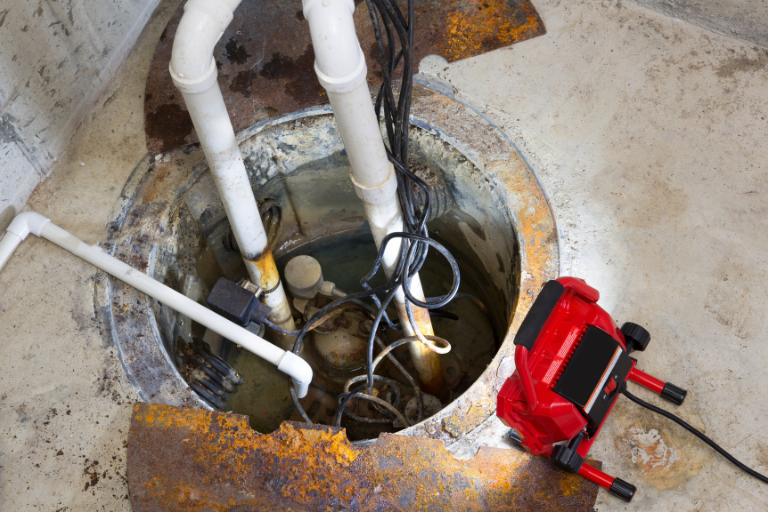
Most homeowners don’t think about their sump pump until it stops working, and that usually happens at the worst possible moment: during a heavy storm or spring thaw, when your basement needs it most.
A sump pump quietly collects groundwater from your drain tile system and pumps it away from your foundation. When it fails, that water has nowhere to go but into your basement. Here’s how to tell if yours is due for replacement before it lets you down.
1. Your Sump Pump Is Getting Old
Sump pumps don’t last forever. Many pumps last somewhere around 7 to 10 years, depending on quality and how hard they work. Pumps in wetter areas or homes with high water tables run more often and may wear out sooner.
If you don’t know how old your pump is, or it’s been in place for many years, it’s worth having it checked before storm season.
2. It Makes Strange Noises
A healthy sump pump runs with a low, steady hum. Grinding, rattling, gurgling or loud clunking can point to worn bearings, a damaged impeller or debris in the pump. These noises often mean the motor is struggling and could fail soon.
3. It Runs All the Time
If your pump runs constantly, even when it hasn’t rained, something is wrong. Common causes include:
- Undersized pump: the pump is too small for the amount of water coming in.
- Stuck float switch: the pump can’t tell when to shut off.
- Missing or failed check valve: water flows back into the pit after it’s pumped out.
- Very high water table: the pump simply can’t keep up.
A pump that never gets a break wears out much faster.
4. It Cycles On and Off Too Often
Short cycling, where the pump turns on and off rapidly, is often caused by a float switch problem or an incorrectly sized pit. This constant stop-start puts extra strain on the motor and shortens its life.
5. It Doesn’t Turn On During Rain
This is the most serious warning sign. If you see water in the pit rising and the pump isn’t kicking on, it could be a failed motor, a tripped circuit, a stuck float or a clogged intake. Don’t wait for the next storm to find out.
6. Visible Rust or Corrosion
Rust on the pump, discoloured water in the pit or corroded parts can mean the pump is breaking down. Corrosion can also point to bacteria or iron in the water that clogs and damages the pump over time.
7. Water Isn’t Leaving Your Home
Sometimes the pump works fine, but the discharge line is the problem. A cracked, disconnected or frozen discharge line can send water right back toward your foundation, or stop it from leaving at all. In Michigan winters, frozen discharge lines are a common issue.
How to Test Your Sump Pump
You can do a quick check yourself:
- Make sure the pump is plugged in and the outlet has power.
- Slowly pour a bucket of water into the sump pit.
- Watch for the float to rise and the pump to turn on.
- Confirm the water level drops and the pump shuts off on its own.
- Check outside that water is flowing out of the discharge line away from the house.
If the pump hesitates, struggles, makes unusual noise or doesn’t shut off, it’s time for a professional look.
Repair or Replace?
Sometimes a simple fix like replacing a float switch or check valve solves the problem. But if your pump is older, noisy and running constantly, replacement is often the smarter long-term choice. A new, properly sized pump gives you peace of mind every time a storm rolls in.
Sump Pump Installation & Replacement in Metro Detroit
Affordable Dry Basement installs and replaces sump pumps and complete sump pump installation kits for homeowners across Metro Detroit. We also repair and replace discharge lines and flush clogged drain tile so your whole system works the way it should.
Since 1985, we’ve given honest advice and fair pricing, and we’ll never sell you something you don’t need.