If you’ve found water coming through your basement wall, the next question is: where exactly is it coming from? In homes with poured concrete foundations, two of the most common culprits are wall cracks and rod holes.
They can look similar at first glance, and both let water in, but they have different causes and need different repairs. Here’s how to tell them apart.
What Are Rod Holes?
When a poured concrete foundation is built, wooden or metal forms hold the wet concrete in place. Metal tie rods run through the wall to keep those forms together. Once the concrete sets, the forms come off and the rods are snapped off, leaving small holes in the wall.
These rod holes are usually plugged during construction, but the plugs can shrink, crack or deteriorate over time. When that happens, groundwater can seep straight through.
How to Spot a Rod Hole Leak
- Shape: small, round spots, often about the size of a coin.
- Pattern: evenly spaced in straight horizontal rows across the wall.
- Stains: rust-colored streaks running down from the hole, caused by the corroding metal rod.
- Timing: dripping or dampness that appears after heavy rain.
If you see several wet spots lined up across your wall like dots, you’re almost certainly looking at rod holes.
What Are Foundation Wall Cracks?
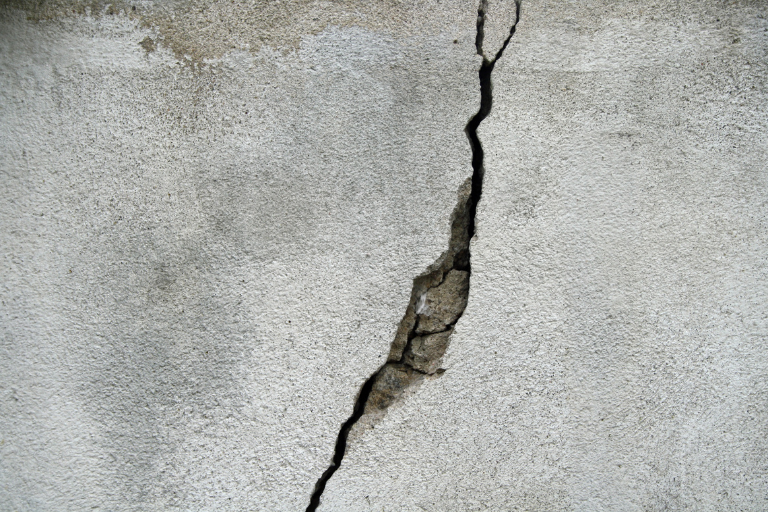
Foundation cracks form as concrete cures and shrinks, as the house settles, or as soil pressure pushes against the walls. Michigan’s freeze-thaw cycles add extra stress, as water in the soil expands and contracts through the seasons.
How to Spot a Wall Crack Leak
- Shape: a line, often running vertically or diagonally.
- Location: frequently near windows, corners or the middle of long walls.
- Signs: dampness, water stains or white mineral residue along the crack.
- Timing: leaking during wet weather, sometimes worse in spring.
When a Crack Is More Serious
Most vertical hairline cracks are common and can be sealed. But watch for:
- Horizontal cracks: these can signal soil pressure pushing the wall inward.
- Stair-step cracks: common in block walls and a sign of movement.
- Widening cracks: any crack that gets bigger over time.
- Bowing or leaning walls: a structural issue that may need reinforcement such as I-beams.
These signs mean the wall may be moving, and a leak repair alone may not be enough.
How Each Is Repaired
Rod holes are sealed from the inside, closing off the path water uses to get through the wall. It’s usually a quick repair.
Wall cracks are commonly repaired by filling and sealing the crack so water can’t pass through. If the wall is bowing or moving, reinforcement may be needed as well.
In both cases, the key is proper diagnosis. Surface patches from the hardware store often fail because they don’t seal the full depth of the leak.
Can You Have Both?
Yes, and it’s common. Many basements with poured walls have both leaking rod holes and cracks. And if water is also appearing at the floor joint, the drain tile system may need attention too. A full inspection makes sure every entry point is found, so you don’t fix one leak only to discover another.
Wall Crack & Rod Hole Repair in Metro Detroit
Affordable Dry Basement has repaired basement wall cracks and leaking rod holes for Metro Detroit homeowners since 1985. We’ll find exactly where the water is coming in, explain your options honestly and back the work with our lifetime transferable warranty.